
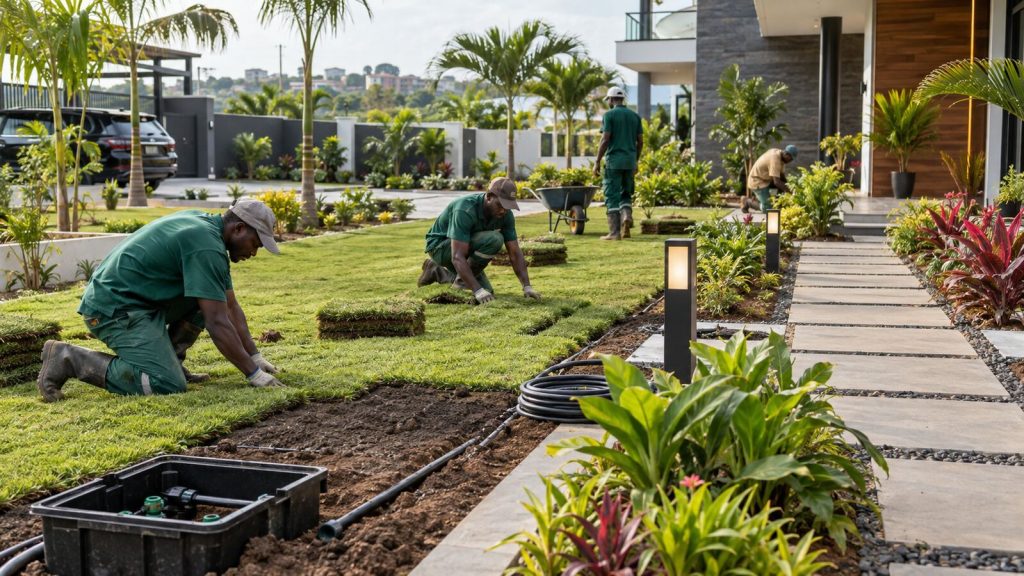
Landscape construction is the practical process of turning an outdoor design into a functional, attractive, and manageable space. It combines site preparation, planting, drainage, irrigation, lighting, and other physical improvements that shape how an outdoor area looks and works. For homeowners, estate developers, hotel managers, office managers, and commercial property owners, understanding this process makes it easier to plan realistic projects and avoid costly mistakes.
Unlike routine garden care, construction involves permanent or semi-permanent changes to the property. Therefore, every decision should respond to the site’s intended use, soil, drainage, available space, existing buildings, and long-term maintenance needs. This guide explains what the work involves, how the process is managed, and what property owners in Nigeria should consider before beginning.
Casaterranova
Website: www.casaterranova.ng
Phone: +234 911 351 5312
Address: 9 Jerry Gana Close, Utako, Abuja
What Is Landscape Construction?
Landscape construction is the implementation stage of an outdoor design project. It begins after the property’s needs have been assessed and an appropriate plan has been developed. The work may involve installing lawns, planting areas, irrigation systems, outdoor lighting, drainage features, walkways, and other elements needed to make the space usable.
The exact scope depends on the property. For instance, a residential compound may require a lawn, planting beds, safe walkways, and irrigation. An office building may need organised circulation, outdoor lighting, low-maintenance planting, and welcoming entrance areas. Meanwhile, hotels often need outdoor spaces that support guest movement, appearance, comfort, and regular maintenance.
Site assessment and project planning
Every successful outdoor project starts with a detailed assessment. The contractor studies the property’s size, levels, soil condition, existing vegetation, water movement, access points, sunlight, and relationship with nearby buildings.
This assessment helps identify practical limitations before physical work begins. For example, a low section may collect rainwater, while a heavily shaded area may not support the same plants as an open lawn. Additionally, vehicle access may affect how materials and equipment are brought onto the site.
Casaterranova uses Environmental Design to connect outdoor improvements with the conditions and intended use of a property. As a result, construction decisions are based on a coordinated plan rather than isolated additions.
Clearing and preparing the site
Site preparation creates a suitable foundation for the planned work. Depending on the condition of the property, it may involve removing unwanted vegetation, construction waste, unsuitable soil, or damaged landscape elements.
The ground may also need grading or levelling. Proper grading supports drainage, stable walkways, healthy planting areas, and easier maintenance. If this stage is poorly handled, water can collect around lawns, entrances, paths, or building foundations.
Establishing drainage and ground levels
Drainage determines how rainwater moves across the property. It should therefore be considered early, particularly in locations that experience heavy seasonal rainfall.
Construction may include shaping the ground, creating appropriate slopes, or introducing channels that direct water away from vulnerable areas. The solution must suit the property rather than simply move water from one problem area to another.
Good drainage protects planting, improves access, and reduces muddy or waterlogged sections. In fact, lawns and planting areas are easier to maintain when excess water can leave the site safely. Drainage planning should coordinate with walkways, irrigation, buildings, and surrounding properties.
Building functional outdoor areas
Outdoor construction should support the way people use the property. This can involve organising entrances, paths, sitting areas, planting zones, lawns, and service spaces so that movement remains safe and convenient.
The chosen layout depends on the project. A family home may need clear movement between the house, parking area, garden, and entrance. On the other hand, a commercial property may require defined circulation that separates visitors, staff, vehicles, and maintenance activities.
Landscape Construction should balance appearance with practicality. Attractive materials are useful, but they must also suit the expected foot traffic, weather exposure, cleaning routine, and maintenance capacity of the property.
Installing lawns and planting areas
Plants soften built surfaces, provide shade, organise space, and improve the general character of a property. Nevertheless, planting should follow proper soil preparation and spacing.
The construction team prepares planting beds, improves unsuitable soil where necessary, and places plants according to their mature size and environmental requirements. Crowding plants may create an immediate full appearance, but it can cause competition and maintenance problems later.
Lawn installation also requires suitable ground preparation. The soil should support rooting, drainage, and an even finished surface. After installation, the lawn needs an establishment period with appropriate watering and restricted traffic.
For residential properties, Casaterranova’s Residential Landscaping service can coordinate planting, lawn areas, movement, irrigation, and maintenance needs as parts of one project.
Adding irrigation systems
An irrigation system distributes water to lawns and planting areas in a planned manner. This is especially valuable where manual watering would be inconsistent, time-consuming, or difficult to manage.
Irrigation System Installation should match the site’s planting zones, water availability, and maintenance routine. Different areas may have different watering requirements; therefore, applying the same amount of water everywhere can lead to waste or unhealthy plants.
The system should be planned before final surfaces and planting are completed. Doing so reduces the need to disturb finished work later. Additionally, property managers should understand how the system will be operated, inspected, and adjusted.
Integrating outdoor lighting
Outdoor Lighting helps people move through entrances, walkways, gardens, and selected activity areas after dark. It can also highlight important landscape elements without making the property excessively bright.
Lighting points and cable routes should be coordinated during construction. This allows them to fit safely into the overall layout. Suitable lighting may be placed near steps, paths, entrances, seating spaces, or prominent plants.
However, every part of the landscape does not need illumination. A balanced arrangement focuses on visibility, atmosphere, and the property’s actual nighttime use. Casaterranova provides Outdoor Lighting as one of its approved services for residential and commercial environments.
Completing and inspecting the project
Before handover, the installed work should be inspected against the agreed plan. The contractor checks the planting, lawn, irrigation, lighting, drainage, access routes, and general finish.
Any incomplete or damaged elements should be addressed before the project is considered finished. The owner should also receive practical information about watering, plant establishment, lawn care, irrigation use, and routine maintenance.
More Important Information
How outdoor construction differs from landscape design
Landscape design develops the concept, layout, and relationship between outdoor elements. Construction turns those decisions into physical work. Although the two stages are different, they should remain closely connected.
Starting construction without a suitable plan can result in misplaced paths, poor drainage, unsuitable planting, or repeated work. Likewise, a design that ignores practical installation and maintenance may be difficult to implement.
Therefore, property owners should treat planning and construction as connected phases. Casaterranova offers Environmental Design and Landscape Construction, allowing the site strategy and implementation requirements to be considered together.
Choosing services that match the property
Not every project requires every available service. The right combination depends on the property type, present condition, budget, and intended use.
| Property need | Relevant approved service |
|---|---|
| Complete residential outdoor improvement | Residential Landscaping |
| Site preparation and physical installation | Landscape Construction |
| Planned watering for lawns and plants | Irrigation System Installation |
| Visibility around paths and entrances | Outdoor Lighting |
| Ongoing lawn and landscape care | Lawn Care & Maintenance |
| Outdoor areas for offices or businesses | Commercial Outdoor Design |
| Hotel grounds and guest-facing spaces | Landscaping for Hotels |
| Elevated outdoor areas | Rooftop Design |
Budget and project scope
A useful budget should reflect the complete scope rather than the visible features alone. Site preparation, soil work, drainage, labour, access, materials, irrigation, lighting, planting, and aftercare can all affect the total cost.
Before construction starts, the property owner should define priorities. Essential work such as grading, drainage, safe movement, and irrigation planning should generally come before decorative additions. Moreover, completing foundational work correctly can reduce expensive repairs later.
Clear documentation also helps control the project. The agreed scope should identify what will be installed, what is excluded, and how any additional work will be approved.
Maintenance after installation
Construction does not eliminate the need for maintenance. Lawns require mowing and feeding, plants require pruning and monitoring, irrigation systems require inspection, and outdoor lighting may need cleaning or component replacement.
Maintenance should therefore influence the design and construction from the beginning. A complex landscape may look impressive at first but decline if the owner lacks the time or resources to maintain it.
Casaterranova’s Lawn Care & Maintenance service can support properties that need regular attention after installation. Nevertheless, owners should still understand the basic requirements of their landscape and report developing problems early.
Selecting a suitable contractor
A suitable contractor should understand site conditions, sequencing, drainage, planting, irrigation, lighting, and maintenance. Property owners should ask how the project will be planned and how different services will be coordinated.
For professional outdoor planning and implementation, property owners can contact Casaterranova through www.casaterranova.ng or call +234 911 351 5312.
Conclusion
Landscape construction turns an outdoor plan into a usable physical environment. It can include site preparation, drainage, planting, lawn installation, irrigation, lighting, and the organisation of functional outdoor areas. However, successful results depend on careful assessment, correct sequencing, realistic budgeting, and long-term maintenance planning.
Property owners should begin with the site’s actual needs and select only the services that support the project’s purpose. When planning and construction work together, the finished landscape is more likely to remain attractive, practical, and manageable.
Casaterranova
Website: www.casaterranova.ng
Phone: +234 911 351 5312
Address: 9 Jerry Gana Close, Utako, Abuja
FAQs About What Is Landscape Construction?
1. What does landscape construction include?
Landscape construction can include site preparation, grading, drainage work, lawn installation, planting, irrigation systems, outdoor lighting, walkways, and the organisation of usable outdoor areas. The exact work depends on the property’s condition and intended use. A residential project may focus on lawns, planting, and family movement, while a commercial property may require formal entrances, durable access routes, lighting, and low-maintenance planting.
2. What is the difference between landscape design and landscape construction?
Landscape design is the planning stage, during which the layout, materials, planting, circulation, and functional relationships are developed. Landscape construction is the implementation stage that turns the plan into physical work. Both stages should remain connected because a design must respond to actual site conditions, while construction should follow an organised plan.
3. Why is site preparation important before outdoor construction?
Site preparation creates a stable foundation for the planned improvements. It may involve clearing waste, removing unsuitable vegetation, adjusting ground levels, improving soil, and protecting features that will remain. Without proper preparation, lawns can become uneven, planting may struggle, water can collect, and installed surfaces may not perform as expected.
4. How long does a landscape construction project take?
The duration depends on the property’s size, existing condition, scope, access, materials, weather, and number of services involved. A focused residential improvement may take less time than a complete hotel or commercial project. A contractor should assess the property and provide a realistic schedule that accounts for preparation, installation, inspection, and plant establishment.
5. Should drainage be planned before planting and lawn installation?
Yes. Drainage and ground levels should be addressed before final planting and lawn installation because they influence how water moves through the property. Installing plants before correcting drainage may lead to waterlogging, erosion, unhealthy roots, or repeated work. Irrigation, paths, building entrances, and neighbouring properties should also be considered during drainage planning.
6. Is an irrigation system necessary for every landscape?
No. The need for irrigation depends on the property’s size, planting, water availability, maintenance routine, and local conditions. However, it can improve watering consistency and reduce the labour required for larger lawns and planting areas. The system should be divided according to actual watering needs and planned before finished surfaces are completed.
7. Can landscape construction be completed in phases?
Yes. Phased construction can help property owners manage budgets and prioritise essential improvements. However, the entire site should still be planned before the first phase begins. Foundational work such as grading, drainage, underground irrigation, and cable routes should be completed in the correct sequence so later phases do not damage finished areas.
8. What should property owners budget for?
A realistic budget may need to cover assessment, design, site preparation, labour, soil improvement, drainage, materials, lawns, plants, irrigation, lighting, access, waste removal, and aftercare. Owners should prioritise essential functional work before optional decorative additions. A clear written scope helps show what is included and how additional work will be handled.
9. What maintenance is required after construction?
Newly installed lawns and plants need suitable watering and protection while they establish. Long-term work can include mowing, pruning, feeding, weed control, irrigation inspection, drainage checks, and outdoor-lighting maintenance. The exact routine depends on the landscape. Casaterranova provides Lawn Care & Maintenance for properties requiring ongoing professional attention.
10. Who can provide landscape construction services in Nigeria?
Property owners should choose a company that can coordinate planning, site preparation, planting, irrigation, lighting, and maintenance requirements. Casaterranova provides Landscape Construction and other approved outdoor services for different property types. Visit www.casaterranova.ng, call +234 911 351 5312, or visit 9 Jerry Gana Close, Utako, Abuja.