
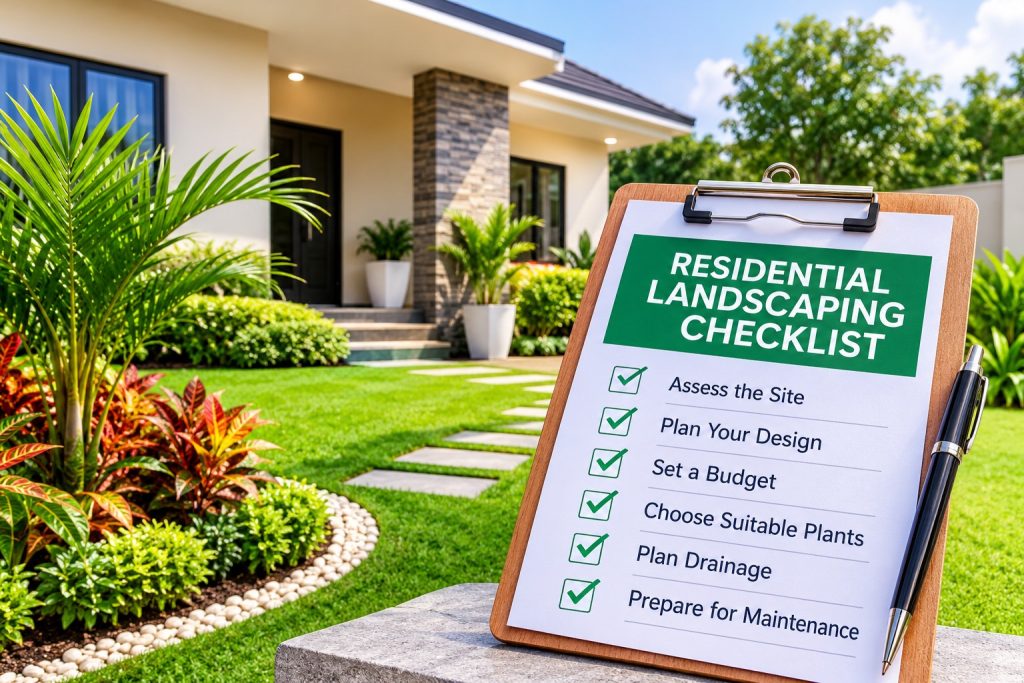
Planning a residential landscaping project in Nigeria involves more than choosing attractive plants or laying a lawn. Property owners must consider soil conditions, drainage, sunlight, available space, materials, budget and future maintenance. This guide gives you a practical residential landscaping checklist to follow before construction begins. It also explains the decisions involved at each stage and how Casaterranova approaches landscape design and construction for Nigerian properties.
Contact Casaterranova
Phone: +234 9113515312
Email: Info@casaterranova.ng
Address: 9 Jerry Gana Close, Utako, Abuja, Nigeria
Website: casaterranova.ng
Residential Landscaping Checklist In Nigeria
Residential landscaping is the planning, design and development of outdoor spaces to make them functional, attractive and easier to maintain. Before starting, use this checklist to identify what your property needs and what you must organise.
Residential Landscaping Pre-Project Checklist
- Assess the property: Measure the available outdoor space. Identify existing buildings, trees, fences, walkways, gates and other features that could affect the design.
- Examine the soil: Check the soil condition, texture and suitability for the plants you intend to grow. Identify areas that may require soil preparation.
- Evaluate drainage: Look for places where rainwater collects, especially around buildings, walkways and low sections of the compound. Plan how water should flow away from these areas.
- Study sunlight and shade: Observe which parts of the property receive direct sunlight and which remain shaded. This will influence plant selection and the placement of outdoor features.
- Define your landscaping goals: Decide whether you need a garden, lawn, outdoor relaxation area, walkway, decorative landscape or a combination of features.
- Establish a realistic budget: Account for design fees, labour, plants, soil preparation, materials, drainage, installation and future maintenance.
- Choose suitable plants: Select plants that can tolerate the local weather and the soil, sunlight and watering conditions of your property.
- Prepare a landscape design: Plan where plants, lawns, pathways, seating areas, lighting and other features will go before construction begins.
- Plan water supply and irrigation: Decide how the plants will receive water, particularly during periods of limited rainfall.
- Select suitable landscaping materials: Consider durability, appearance, availability and maintenance when choosing paving, stones, edging and other materials.
- Plan the construction process: Establish the work sequence, labour requirements, material sourcing and expected project timeline.
- Consider security and privacy: Ensure the design complements existing fencing, gates, outdoor lighting and the property’s security arrangements.
- Create a maintenance plan: Decide how frequently the lawn, plants, drainage channels and outdoor surfaces will need attention.
- Consult a landscaping professional: Have the proposed design and site conditions assessed before committing to major landscaping work.
Final check: Do not begin installation until you have considered the site assessment, drainage plan, design, budget, material selection and maintenance arrangements. Addressing these decisions early can help reduce avoidable costs and prevent problems during and after construction.
The checklist provides a starting point, but each property has different requirements. For example, a compound with limited outdoor space may need a different design from a property with a large garden. Therefore, assess the actual site rather than copying another property’s layout.
RECOMMENDED ARTICLES
How to Choose a Landscape Construction Company In Nigeria
What Is Landscape Construction? Everything You Need to Know
Top Lawn Care and Maintenance Firms in Nigeria
How To Assess Your Property Before Residential Landscaping
A proper site assessment helps you understand the opportunities and limitations of your outdoor space. It also prevents design decisions that may become expensive to correct during construction.
Examine Soil Conditions
Soil affects how well plants establish themselves and how water moves through the ground. Therefore, examine the soil before choosing plants or deciding where garden beds should go.
Look at the condition of the ground across different parts of the property. Some areas may have compacted soil, while others may retain water or require preparation before planting.
Do not assume that every section of the compound has the same conditions. Existing construction work, foot traffic and previous landscaping can create differences across the site.
For a more reliable assessment, include soil condition in the site analysis before finalising the design. This is particularly useful when planning residential landscaping that combines lawns, planting areas and paved surfaces.
Check Drainage And Water Movement
Drainage deserves serious attention before any landscaping work begins. During heavy rainfall, poorly planned outdoor spaces can allow water to collect around buildings, paths and planted areas.
Walk around the property after rainfall if possible. Observe where water gathers, which areas remain wet and whether existing channels appear to direct water away from the compound.
Also consider how proposed paving, raised garden beds and other structures may affect water movement. A design should not simply move water from one problem area to another.
For properties that need more detailed planning, drainage and flood control solutions should form part of the overall landscape design. Casaterranova considers drainage during its site analysis process rather than treating it as an afterthought.
Study Sunlight, Shade And Available Space
Sunlight affects plant selection and the location of outdoor features. Observe the property at different times of the day to understand how sunlight reaches the garden, walls and open areas.
Next, measure the usable space. Account for existing structures, access routes and areas that need to remain clear. A design that looks attractive on paper may become impractical if it obstructs movement around the property.
Space optimisation is particularly important where the compound has limited room. Instead of filling every available area with plants or decorative features, create a layout that supports movement and the intended use of the space.
How To Plan Your Residential Landscaping Budget
A realistic budget helps you decide what can be completed and which features should receive priority. It also reduces the risk of beginning a project that you cannot finish.
Identify The Main Cost Components
The cost of a landscaping project depends on its size, materials and design complexity. Consequently, two properties with similar outdoor areas may require different budgets.
Start by separating the project into its major requirements. These may include professional design, site preparation, soil work, drainage, planting, paving, lighting, irrigation and construction labour.
Also consider the condition of the existing compound. A site that requires significant preparation may involve different work from one that is already suitable for installation.
Do not focus only on the visible features. A beautiful lawn or decorative garden may attract attention, but the groundwork and drainage arrangements also influence the overall quality of the project.
Separate Essential Features From Optional Additions
List the features your property needs before deciding which decorative additions to include. For instance, resolving drainage concerns may be more important than installing an elaborate water feature.
Similarly, a practical walkway may offer greater everyday value than decorative paving that does not improve access. Consider how each feature supports the way you use the property.
You can also organise the project into stages if the full design cannot be completed immediately. However, the overall layout should be planned first so that later work does not interfere with completed sections.
Request A Clear Project Quote
Before committing to construction, ask for a breakdown of the proposed work. The quote should make it easier to understand what the project includes and which materials or activities may require additional attention.
Compare quotations based on their scope, not just the final amount. A lower quote may exclude important preparation work or features included in another proposal.
Casaterranova prepares tailored quotes after consultation because project requirements vary according to the site, materials and design complexity. Property owners can request a free quote before deciding how to proceed.
Choosing Plants And Materials For Nigerian Outdoor Spaces
Plant and material selection should reflect the conditions of the property, the intended design and the amount of maintenance the owner can manage. Attractive choices are not always practical choices.
Select Plants Based On Site Conditions
Start with the sunlight, soil and water conditions identified during the site assessment. Then consider how much attention different plants will require as they grow.
Avoid choosing plants simply because they look attractive in another garden. Their suitability depends on whether the conditions in your compound can support them.
Consider the space each plant may occupy as it develops. Planting too close to buildings, pathways or one another can create maintenance and access problems later.
A well-planned planting layout should also consider the overall appearance of the compound. Combining different plant heights and textures can create visual interest without overcrowding the space.
Consider Hardscape And Softscape Features
Hardscape refers to constructed outdoor elements such as walkways, paved areas, edging and seating structures. Softscape refers to living elements, including lawns, shrubs and other plants.
Both contribute to a complete outdoor design. However, their placement should support the same overall plan.
For example, a walkway should provide convenient access without cutting through important planting areas. Similarly, a lawn should have a practical shape that allows it to be maintained without unnecessary difficulty.
Residential landscaping should balance these features instead of treating them as unrelated additions. The design should also account for drainage and the way people move through the compound.
Plan Irrigation And Outdoor Lighting
Watering arrangements should be considered before planting begins. Decide how water will reach different garden areas and whether an irrigation system is appropriate for the property.
Outdoor lighting also deserves early consideration. It can support visibility around pathways and entrances while contributing to the appearance of the compound after dark.
However, lighting positions should fit the layout rather than interfere with plants, movement or other outdoor features. Likewise, irrigation planning should reflect the actual planting arrangement.
For properties that require these features, an irrigation system and outdoor lighting can be considered as part of a coordinated landscape design.
The Residential Landscaping Design And Construction Process
Once you understand the property and its requirements, the next step is turning the plan into a workable design. A clear process helps property owners understand what happens before, during and after installation.
Consultation And Site Analysis
The process begins with a consultation to understand the owner’s requirements, preferences and intended use of the outdoor space.
Next, site analysis examines the conditions that may influence the project. These include soil condition, drainage, sunlight exposure and space use.
This stage is important because the design must respond to the actual property. A layout developed without considering these conditions may create difficulties during construction or maintenance.
Design And Material Planning
After the site analysis, the design stage develops the proposed layout. It considers the positioning of plants, lawns, pathways and other outdoor features.
Detailed layouts and 3D concepts may be used where needed to help the owner understand the proposed arrangement. Material specifications also form part of the planning process.
At this stage, property owners should review the design carefully. Changes are easier to discuss before construction begins than after materials have been installed.
Execution And Quality Assurance
Once the design is agreed, execution involves the landscape construction work. The sequence depends on the project requirements and the activities involved.
During this stage, the work should follow the agreed design. Quality assurance helps assess whether the completed work reflects the intended plan.
Casaterranova’s process includes consultation, site analysis, design, execution, quality assurance, and completion with maintenance guidance. Its residential landscaping and landscape construction work follows this project sequence.
If you are planning an outdoor improvement project, you can explore Casaterranova’s residential landscaping service or contact the team to discuss your property and request a free quote.
Understand The Project Timeline
Project duration depends on the size and complexity of the work. Small projects may take a few days, while larger developments may require several weeks.
However, the actual schedule depends on the activities involved and the condition of the site. Discuss the expected timeline during consultation rather than relying on estimates from unrelated projects.
You should also clarify the order of work and how access to the compound may be affected during construction. This helps you prepare for the project and manage expectations.
Common Residential Landscaping Mistakes And How To Avoid Them
A landscaping project can become difficult to manage when important decisions are delayed or made without considering the property as a whole. Avoiding common mistakes can help protect your budget and the quality of the finished space.
Starting Without A Complete Design
One common mistake is beginning work before the overall layout has been considered. Property owners may install a lawn, purchase plants or construct a walkway without knowing how these features will fit together.
As a result, parts of the project may need to be changed later. A complete design helps establish the relationship between the different outdoor features before construction starts.
Ignoring Drainage
Another mistake is focusing on appearance while overlooking water movement. Paving, planting beds and other features can affect how rainwater moves across the property.
Therefore, drainage should be considered during the site assessment and design stages. Do not wait until water begins collecting in an inconvenient area before addressing it.
Choosing Plants Without Considering Maintenance
Some property owners select plants based entirely on appearance. However, the long-term requirements of those plants may not suit the time or resources available to maintain the garden.
Consider watering, pruning, cleaning and general care before making your choices. A simpler planting arrangement that can be maintained properly may be more practical than a complicated design that becomes neglected.
Spending The Budget On Decorative Features First
Decorative additions can improve the appearance of an outdoor space. Nevertheless, they should not take priority over essential preparation, drainage and construction requirements.
Set your priorities before spending money. Then allocate the available budget according to the work the property needs.
Failing To Plan For Long-Term Maintenance
A completed project still requires attention. Lawns need care, plants need appropriate watering and drainage areas need to remain clear.
Before construction, decide who will maintain the outdoor space and what regular tasks will be required. This helps ensure that the design remains practical after installation.
Choosing A Contractor Without Reviewing The Scope
Do not select a contractor based only on a verbal estimate or attractive photographs. Understand what the proposed work includes and whether it addresses the conditions of your property.
Ask questions about the design, materials, drainage arrangements, construction sequence and maintenance guidance. Clear communication before work begins can reduce misunderstandings later.
Preparing Your Property With Professional Guidance
A successful project depends on decisions made before construction begins. The right design should respond to the site’s conditions, the owner’s priorities and the amount of maintenance the property can support.
Request A Residential Landscaping Consultation
Casaterranova works on residential landscaping and landscape construction for properties in Nigeria. If you are preparing to improve your compound, contact the team to discuss your requirements, request a site inspection or obtain a free quote through the contact page.
A practical residential landscaping checklist helps you assess the property, plan the budget, choose suitable features and prepare for construction. By addressing these decisions early, you can approach your project with a clearer plan.
Contact Casaterranova
Phone: +234 9113515312
Email: Info@casaterranova.ng
Address: 9 Jerry Gana Close, Utako, Abuja, Nigeria
Website: casaterranova.ng
FAQs About Residential Landscaping In Nigeria Checklist Before Starting A Project
1. What Should I Check Before Starting Residential Landscaping In Nigeria?
Assess the available space, soil condition, drainage, sunlight, budget and intended use of the compound. You should also plan plant selection, materials, irrigation, construction and future maintenance before installation begins.
2. Why Is Drainage Important Before Landscaping?
Drainage affects how rainwater moves through the property. Poor planning can leave water collecting around buildings, pathways and planted areas. Therefore, assess existing water movement before installing lawns, paving or garden features.
3. How Much Does Residential Landscaping Cost In Nigeria?
There is no single cost for every project. The amount depends on the property size, site condition, materials and design complexity. Request a tailored quotation after consultation so the proposed work reflects your actual requirements.
4. How Long Does A Residential Landscaping Project Take?
Small landscaping projects may take a few days, while larger developments can require several weeks. The duration depends on the scope of work, site conditions and design complexity. Discuss the expected schedule before construction starts.
5. Should I Complete Landscaping Before Or After Building Construction?
The timing depends on the property’s construction stage and the work involved. However, considering the landscape layout early can help coordinate outdoor access, drainage and space use with the wider property plan.
6. How Do I Choose A Landscaping Company In Nigeria?
Review the company’s relevant services, understand its design and construction process, and discuss how it assesses site conditions. Ask for a clear project scope and tailored quotation before making a decision.