
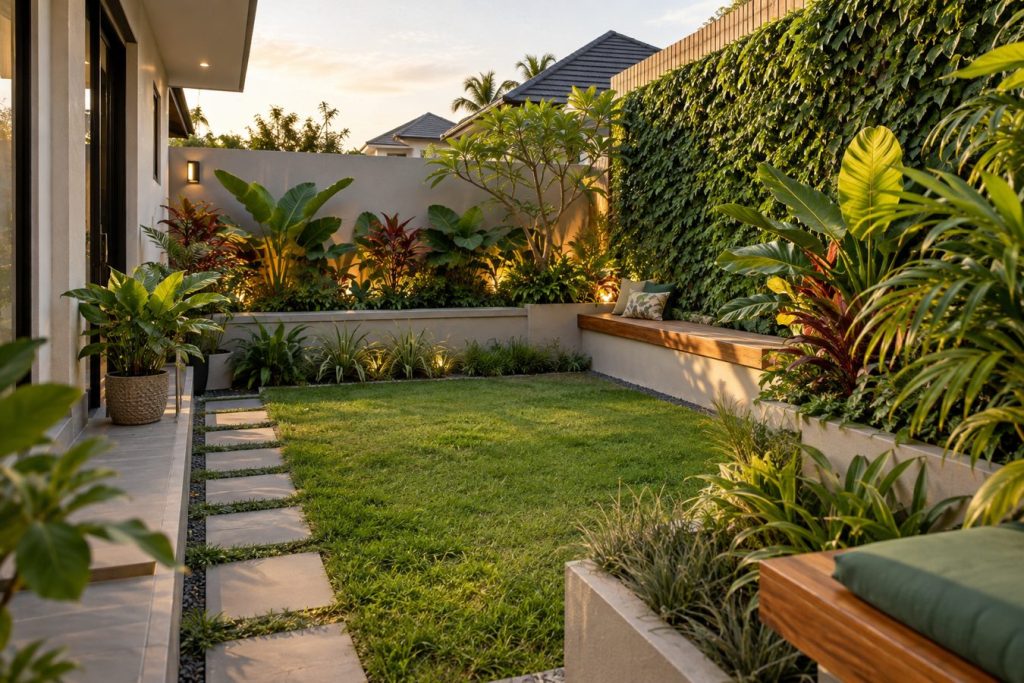
Backyard landscaping ideas for small spaces can transform a limited outdoor area into a practical, attractive, and comfortable extension of the home. The most successful small backyards use every section carefully without filling the space with unnecessary features. This guide presents landscaping ideas suited to compact residential properties and explains how homeowners can organise planting, movement, lighting, irrigation, and maintenance.
Casaterranova
Website: www.casaterranova.ng
Phone: +234 911 351 5312
Address: 9 Jerry Gana Close, Utako, Abuja
Backyard Landscaping Ideas for Small Spaces
A small backyard needs a clear plan because every feature affects how spacious and usable the area feels. Instead of treating limited size as a disadvantage, homeowners can choose elements that perform more than one function. The following ideas focus on efficient use of space, manageable planting, comfortable movement, and an organised appearance.
1. Build upward with vertical planting
Vertical planting makes use of walls, fences, and upright structures instead of occupying valuable ground space. It can introduce greenery while leaving room for seating and movement.
Homeowners can arrange suitable climbing plants, wall-mounted planters, or narrow upright planting features along selected boundaries. However, the placement should allow access for watering and maintenance. Plants should also be chosen according to the sunlight and airflow available in that part of the backyard.
A well-planned vertical feature can soften a plain wall, improve privacy, and create a strong visual point without making the garden feel crowded.
2. Use built-in seating around the edges
Freestanding chairs and tables can consume a large portion of a compact backyard. Built-in seating placed against a wall or boundary can preserve the centre of the space and create a more organised layout.
The seating may also be integrated with raised planting areas where the design allows. As a result, one feature can support relaxation while also defining the garden’s structure. The dimensions should remain comfortable, and enough space should be left for safe movement.
Professional Residential Landscaping can help ensure that seating, plants, and pathways work together rather than compete for limited room.
3. Create one clear focal point
A small backyard usually feels more balanced when it has one main point of interest. This could be an attractive planting arrangement, a carefully illuminated tree, or a well-designed seating area.
Using several competing focal points can make the space look disorganised. Therefore, homeowners should decide what they want visitors to notice first and arrange the surrounding elements to support it.
Casaterranova can use Environmental Design to help property owners establish a clear visual direction for compact outdoor areas while keeping the plan connected to the home.
4. Choose a simple pathway layout
Pathways should provide direct access without dividing a small backyard into too many sections. A simple route from the house to the main seating or garden area is often more effective than several narrow paths.
The pathway width, material, and direction should make movement comfortable. Additionally, the design should consider drainage so that water does not collect along frequently used routes.
Landscape Construction can turn the approved layout into a functional arrangement. Planning the path before planting also helps prevent vegetation from reducing access as it develops.
5. Divide the backyard into compact activity zones
Even a small backyard can support more than one activity when the space is divided carefully. For example, one corner may contain seating, while another provides a planting area or a small open section.
The divisions do not need solid walls. Changes in planting, surface material, lighting, or furniture placement can indicate where one zone ends and another begins. Nevertheless, the overall design should remain visually connected.
This method helps the backyard feel purposeful. Each section has a role, yet the property does not appear fragmented or overcrowded.
6. Select appropriately sized plants
Plant selection has a major effect on how a compact backyard feels. Plants that become too wide or tall for their locations may block pathways, windows, or other important features.
Homeowners should consider the mature size of each plant, not only its appearance when newly installed. A controlled combination of taller, medium, and lower planting can create depth while keeping the arrangement manageable.
Furthermore, leaving adequate space between plants supports maintenance and prevents the backyard from looking congested. Casaterranova can incorporate suitable planting locations into a Residential Landscaping plan based on the property’s conditions.
7. Keep the colour palette coordinated
Too many unrelated colours can make a small outdoor area feel busy. A limited, coordinated palette can create a calmer and more unified appearance.
Homeowners may choose one main group of colours and repeat it across selected planting areas or outdoor features. The colours should complement the building and other permanent elements within the backyard.
A coordinated palette does not mean that every plant must look identical. Instead, repetition provides visual order while differences in leaf shape, height, and texture add interest.
8. Add carefully positioned outdoor lighting
Outdoor Lighting allows homeowners to use compact backyards more comfortably after dark. It can improve visibility around doors, steps, pathways, and seating areas while drawing attention to selected landscape features.
In a small space, a few well-positioned lights are usually more effective than excessive illumination. The goal is to support safe movement and create a welcoming atmosphere without producing glare.
Lighting positions should be considered during the design stage. This allows fixtures and related requirements to be coordinated with planting and construction work.
9. Install an efficient watering arrangement
Small landscapes still require reliable watering. However, watering methods should match the size and arrangement of the planting areas.
An Irrigation System Installation can support consistent water distribution where appropriate. The design should avoid watering pathways, walls, or areas that do not require it. Homeowners should also be able to reach the system for inspection and routine care.
Planning irrigation before completing lawns or planting beds reduces the need to disturb finished areas later. In addition, it connects water management with the wider backyard design.
10. Preserve open space instead of filling every corner
One of the most effective small backyard ideas is to leave some areas open. Empty space helps people move comfortably and allows the eye to rest between features.
Homeowners may be tempted to use every corner for plants, furniture, or decoration. However, restraint often makes a compact garden feel larger and more organised. A small open lawn, clear paved area, or uncluttered pathway can balance more detailed planting zones.
The final layout should prioritise the features the household will actually use. Anything without a clear purpose may reduce rather than improve the backyard’s functionality.
More Important Information
Good ideas must be adapted to the actual property. Before starting Landscape Construction or adding plants, homeowners should examine the backyard’s dimensions, drainage, sunlight, access, and maintenance requirements.
Measure the available area before designing
Accurate measurements help prevent features from becoming too large for the backyard. Homeowners should record the length and width of the space, as well as the positions of doors, windows, drainage points, walls, and existing vegetation.
It is also important to identify the routes people use when moving between the house and other parts of the property. Blocking these routes may make the completed backyard inconvenient.
A scaled plan can then show whether seating, pathways, planting areas, and lighting will fit comfortably. This preparation is particularly valuable when every metre of space matters.
Prioritise essential functions
A small backyard may not accommodate every idea a homeowner likes. Therefore, the household should identify its most important needs before choosing features.
| Household priority | Practical landscape response |
|---|---|
| Outdoor relaxation | Compact seating with surrounding planting |
| Easier movement | One clear and direct pathway |
| Greater privacy | Carefully positioned vertical planting |
| Evening use | Focused Outdoor Lighting |
| Organised watering | Suitable Irrigation System Installation |
| Manageable appearance | Simple planting and regular maintenance |
This approach helps homeowners spend available space on useful features. It also reduces the risk of adding decorative elements that interfere with everyday use.
Plan drainage before installing finishes
Water movement can influence the success of a compact backyard. Because the area is limited, even a small drainage problem may affect pathways, seating, lawns, or planting beds.
Homeowners should observe where water collects after rainfall and how it moves away from the building. The design can then position planted and paved sections more appropriately.
Drainage requirements should be considered before installing final surfaces or delicate vegetation. Otherwise, correcting the problem later may disturb completed Landscape Construction.
Make maintenance realistic
A backyard should remain manageable after installation. Homeowners should consider how they will water plants, remove unwanted growth, trim vegetation, clean pathways, and access every section.
Narrow spaces between features may be difficult to maintain. Similarly, an excessive number of planting areas can create more work than the household expects. A simpler plan may provide a better long-term result.
Casaterranova offers Lawn Care & Maintenance for property owners who need continued support. However, maintenance should still influence the original design so that routine care can be performed efficiently.
Coordinate the relevant landscaping services
Small backyard projects may involve several approved services, including Environmental Design, Residential Landscaping, Landscape Construction, Outdoor Lighting, Irrigation System Installation, and Lawn Care & Maintenance.
Coordinating these services helps prevent conflicts. For instance, irrigation should be planned before planting is completed, while lighting positions should relate to pathways and seating. The order of work matters because finished sections should not be repeatedly disturbed.
Property owners can visit www.casaterranova.ng to discuss which Casaterranova services are relevant to the conditions and intended use of their backyard.
Conclusion
Backyard landscaping ideas for small spaces work best when they prioritise function, proportion, and simplicity. Vertical planting, edge seating, a clear focal point, direct pathways, suitable plants, focused lighting, efficient irrigation, and preserved open space can make a compact backyard more comfortable and attractive.
Before beginning, homeowners should measure the area, establish priorities, assess drainage, and plan realistic maintenance. Casaterranova can support residential property owners with approved design, landscaping, construction, lighting, irrigation, and lawn care services.
Casaterranova
Website: www.casaterranova.ng
Phone: +234 911 351 5312
Address: 9 Jerry Gana Close, Utako, Abuja
FAQs about Backyard Landscaping Ideas for Small Spaces
1. How can I make a small backyard look bigger?
Keep the layout simple, preserve some open space, and avoid filling every corner. Direct pathways, appropriately sized plants, a coordinated colour palette, and one focal point can create a more spacious and organised appearance.
2. What plants work best in a compact backyard?
Suitable plants are those that match the available sunlight, water access, and planting space. Homeowners should consider mature plant size and avoid varieties that may obstruct pathways, windows, or seating areas as they develop.
3. Is vertical planting suitable for a small backyard?
Yes. Vertical planting uses walls, fences, or upright structures, leaving more ground space available for movement and seating. It should be positioned where plants receive suitable light and remain accessible for watering and maintenance.
4. How many activity zones should a small backyard have?
The appropriate number depends on the backyard’s size and the household’s needs. Two or three clearly defined zones may be sufficient. Each zone should have a purpose, and the overall arrangement should still allow comfortable movement.
5. Should a small backyard include a lawn?
A small lawn may provide useful open space when it suits the household’s needs. However, its size, watering requirements, access, and maintenance should be considered. The lawn should not prevent the inclusion of more important functional areas.
6. How can outdoor lighting improve a compact garden?
Outdoor Lighting can improve visibility around entrances, pathways, steps, and seating areas. It can also highlight one selected feature. A small backyard usually needs focused lighting rather than many fixtures, which may cause glare.
7. Is an irrigation system necessary for a small landscape?
It depends on the number and arrangement of planting areas. An Irrigation System Installation may make watering more consistent, but it should be designed for the actual space and avoid distributing water to paths or unnecessary areas.
8. How do I maintain privacy in a limited backyard?
Strategic vertical planting or carefully positioned vegetation can create screening without taking up excessive ground space. The design should balance privacy with sunlight, airflow, maintenance access, and the need to avoid making the backyard feel enclosed.
9. What should be planned before landscape construction begins?
Homeowners should confirm measurements, priorities, drainage, pathways, planting locations, irrigation requirements, lighting positions, and maintenance access. These decisions establish a logical order for construction and reduce changes after finished work has begun.
10. How can I contact Casaterranova about a small backyard project?
Visit www.casaterranova.ng, call +234 911 351 5312, or visit 9 Jerry Gana Close, Utako, Abuja. Before making contact, note the backyard’s measurements, current challenges, and the main activities the household wants the space to support.