
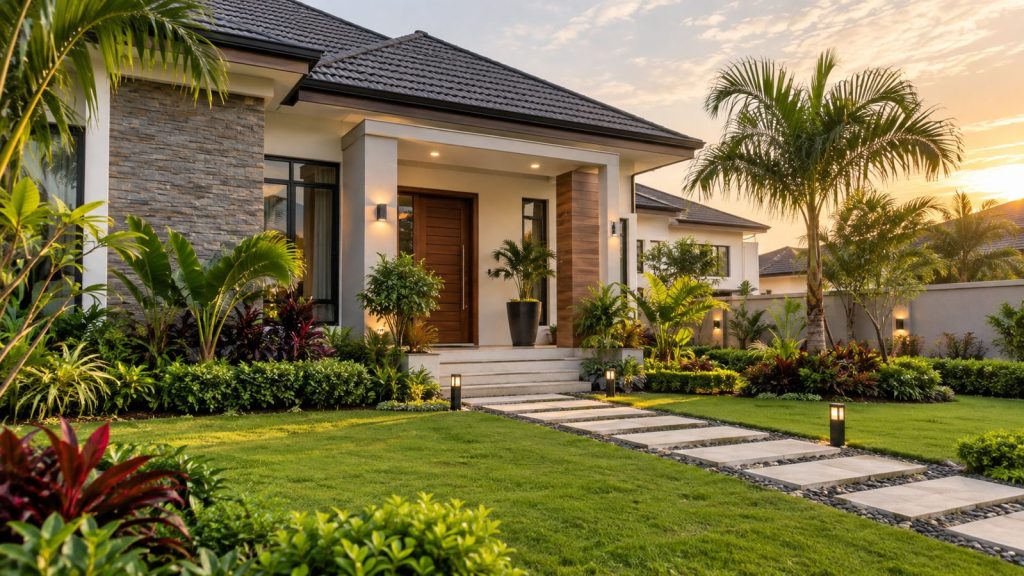
Professional residential landscaping helps homeowners create attractive, practical, and manageable outdoor spaces that support the way they live. It brings together thoughtful planning, suitable planting, safe movement, drainage, lighting, and long-term maintenance. This article explains the major benefits homeowners can gain from a professionally planned landscape and the important factors to consider before beginning a residential outdoor project.
Casaterranova
Website: www.casaterranova.ng
Phone: +234 911 351 5312
Address: 9 Jerry Gana Close, Utako, Abuja
Benefits of Professional Residential Landscaping
A well-designed residential landscape is more than a collection of plants. It connects the home with its surroundings and organises outdoor areas around the property owner’s needs. When the design, construction, lighting, irrigation, and maintenance requirements are considered together, the result can remain attractive and functional for longer.
1. Stronger kerb appeal through thoughtful outdoor design
The exterior of a home shapes the first impression created by the property. An organised entrance, healthy lawn, suitable plants, defined pathways, and carefully arranged outdoor features can make the building feel more welcoming.
Professional planning helps ensure that each element has a clear purpose. For instance, planting can frame the entrance instead of hiding it, while pathways can guide visitors naturally toward the door. The landscape can also be coordinated with the building’s appearance so that the outdoor space feels connected to the property rather than added as an afterthought.
Casaterranova provides Residential Landscaping and Environmental Design for property owners who want outdoor areas planned around both appearance and everyday use.
2. More functional outdoor living spaces
Residential outdoor areas can support relaxation, family activities, social gatherings, and quiet time. However, an empty compound or poorly arranged garden may not provide comfortable spaces for those activities.
A professional residential design divides the available area according to how it will be used. Open lawns may support recreation, shaded areas can provide comfortable seating locations, and pathways can connect important parts of the property. Even where space is limited, careful planning can reduce congestion and help each section serve a clear function.
As a result, the landscape becomes a usable extension of the home. The goal is not simply to fill the property with decorative features, but to create an arrangement that suits the household’s daily routine.
3. Better drainage and water management
Drainage is an important part of residential landscape planning because water movement affects lawns, planting areas, paths, and the spaces close to the building. When drainage is ignored, rainwater may collect in inconvenient areas, wash soil away, or leave parts of the compound difficult to use.
A professional approach examines the shape of the site, the direction in which water naturally moves, and the location of hard surfaces. Planting zones, pathways, and other outdoor features can then be arranged with water flow in mind.
Additionally, an Irrigation System Installation can distribute water more consistently to selected planting areas. Casaterranova can consider irrigation as part of the overall residential landscaping plan, helping property owners avoid treating watering and outdoor design as unrelated decisions.
4. Healthier lawns and planting areas
Plants require suitable locations, enough room to develop, and an appropriate care plan. Choosing plants only because they look attractive can create difficulties if their needs do not suit the conditions within the property.
Professional landscape planning considers sunlight, available space, water access, and the relationship between different planting areas. It also helps prevent overcrowding and reduces the likelihood of placing vegetation where it obstructs windows, entrances, or movement.
Furthermore, Lawn Care & Maintenance supports the appearance and condition of established outdoor spaces. Regular attention to lawns and planted areas helps property owners identify maintenance needs before the landscape becomes untidy or difficult to manage.
5. Improved privacy and household comfort
A carefully arranged landscape can make exposed outdoor areas feel more comfortable. Strategic planting and thoughtful spatial planning may help define private zones without making the compound feel closed or overcrowded.
For example, vegetation can be positioned around seating areas or along selected boundaries while still allowing air, light, and safe movement through the property. The arrangement should respond to the actual layout of the home rather than rely on a standard design used for every property.
Professional planning is particularly useful where neighbouring buildings, roads, or frequently used areas affect privacy. In such cases, the landscape can balance screening, appearance, and practical access.
6. Safer movement after dark
Outdoor areas remain useful after sunset when entrances, pathways, steps, and selected landscape features are properly illuminated. Outdoor Lighting can improve visibility and make movement around the property easier during the evening.
Lighting should be planned according to function. Entrances and changes in ground level may require clear visibility, while garden features may need softer illumination. Too little light can leave important areas difficult to navigate; however, poorly positioned lighting may also create glare or an uncomfortable atmosphere.
Casaterranova offers Outdoor Lighting as an approved service that can be coordinated with the wider residential landscaping plan. This makes it possible to consider cables, fixtures, pathways, and planting before the outdoor space is completed.
7. A more organised approach to landscape construction
Good ideas need careful execution. Landscape Construction turns the approved plan into physical outdoor spaces, including the placement of soft landscaping and relevant structural elements within the design.
Professional coordination reduces the risk of completing work in the wrong order. For instance, drainage and irrigation requirements should be considered before finishing lawns or planting areas. Likewise, pathways and lighting positions should relate to the final layout.
When design and construction decisions support one another, the finished space is more coherent. Property owners can also understand how different parts of the project connect instead of hiring separate providers without a shared plan.
8. Easier long-term care and maintenance
A residential landscape should be designed with future care in mind. A space that looks impressive immediately after installation may become difficult to manage if maintenance requirements were never discussed.
Professional planning can create realistic planting arrangements, sensible lawn areas, accessible irrigation points, and clear routes for routine care. Consequently, homeowners are better prepared for watering, trimming, lawn care, and seasonal adjustments.
Casaterranova’s Lawn Care & Maintenance service can support established landscapes while helping property owners preserve the intended appearance of their outdoor spaces. Planning maintenance from the beginning also helps homeowners make informed decisions about the amount of care they can manage.
More Important Information
The benefits of a professionally planned residential landscape depend on decisions made before construction begins. Homeowners should therefore consider how the property is used, which services are necessary, and how the completed space will be maintained.
Begin with the household’s actual needs
A residential landscaping project should begin with a clear understanding of the people who will use the space. A household that frequently hosts visitors may need organised gathering areas, while a family with children may prioritise open and visible spaces.
Homeowners should identify regularly used entrances, parking areas, preferred seating locations, privacy concerns, and sections that become difficult during wet weather. These observations help the design respond to real conditions rather than assumptions.
Additionally, the available budget should be considered alongside the most important objectives. A phased approach may be more practical than trying to complete every possible feature at once.
Assess the site before selecting features
Every residential property has its own conditions. The size and shape of the compound, sunlight, existing vegetation, ground levels, drainage patterns, and relationship with the building all influence the final design.
A site assessment helps determine where different activities and landscape features can fit naturally. It may also reveal issues that should be resolved before decorative decisions are made. For example, persistent water collection should be addressed before a lawn or planting bed is installed in the affected area.
Environmental Design can help connect these site conditions with the property owner’s goals. Casaterranova can then recommend relevant approved services without introducing features that do not suit the property.
Match services to the purpose of the project
Not every home requires the same combination of landscaping services. The appropriate services depend on the existing condition of the property and the improvements the homeowner wants to achieve.
| Property objective | Relevant approved service |
|---|---|
| Plan the overall outdoor environment | Environmental Design |
| Create or improve a home landscape | Residential Landscaping |
| Implement the approved outdoor plan | Landscape Construction |
| Improve visibility around outdoor areas | Outdoor Lighting |
| Support organised watering | Irrigation System Installation |
| Maintain lawns and planted spaces | Lawn Care & Maintenance |
Plan the work in a sensible order
Residential landscaping normally involves decisions that affect one another. Therefore, property owners should avoid installing visible finishing elements before resolving underlying requirements.
The overall layout should be agreed upon first. Drainage and irrigation considerations can then be coordinated with pathways, planting areas, lawns, and lighting. Once the groundwork is complete, planting and finishing work can proceed with less risk of unnecessary disturbance.
A clear sequence can also make communication easier between the homeowner and the landscaping team. At each stage, the work can be checked against the approved design before the next stage begins.
Consider maintenance before approving the design
Homeowners should ask how frequently lawns and plants will require attention, how irrigation will be managed, and whether every part of the landscape will remain accessible for routine care.
The most suitable design is not necessarily the one with the greatest number of features. Instead, it is the one that balances appearance, use, and realistic maintenance. A simple, well-managed outdoor space may provide more lasting value than a complicated layout that the household cannot maintain.
For professional Residential Landscaping, Landscape Construction, Outdoor Lighting, Irrigation System Installation, or Lawn Care & Maintenance, property owners can visit www.casaterranova.ng to review Casaterranova’s relevant services.
Conclusion
The benefits of professional residential landscaping include stronger kerb appeal, more useful outdoor areas, better water management, safer evening movement, healthier planting, improved privacy, and easier long-term care. These benefits are strongest when the landscape responds to the household’s needs and the actual conditions of the property.
By coordinating planning, construction, irrigation, lighting, and maintenance, homeowners can create outdoor spaces that look organised and remain practical. Casaterranova supports residential property owners with approved landscaping and outdoor design services suited to different project requirements.
Casaterranova
Website: www.casaterranova.ng
Phone: +234 911 351 5312
Address: 9 Jerry Gana Close, Utako, Abuja
FAQs about Benefits of Professional Residential Landscaping
1. What is professional residential landscaping?
Professional residential landscaping is the planned design, construction, and care of outdoor areas around a home. It considers appearance, movement, planting, drainage, lighting, irrigation, privacy, and maintenance so that the different parts of the landscape work together.
2. What are the main benefits of professional residential landscaping?
The main benefits include improved kerb appeal, better use of available outdoor space, safer pathways, organised water management, healthier lawns, greater privacy, and a clearer maintenance plan. The specific benefits depend on the property’s layout and the homeowner’s priorities.
3. Can residential landscaping improve a small property?
Yes. Careful planning can help a small property use limited space efficiently. Defined pathways, appropriately sized planting areas, and multipurpose outdoor zones can reduce clutter. The design should prioritise the homeowner’s most important needs instead of adding too many features.
4. Why is drainage important in a home landscape?
Drainage determines how rainwater moves through the property. Poor water movement can leave lawns, planting areas, or pathways difficult to use. Considering drainage before construction helps the landscaping team position outdoor features more appropriately and reduce avoidable water-related problems.
5. Does a residential garden require an irrigation system?
Not every garden requires the same irrigation arrangement. However, an Irrigation System Installation may help distribute water consistently across selected lawns and planting areas. The decision should consider the size of the landscape, plant requirements, available water access, and the homeowner’s maintenance routine.
6. How does outdoor lighting support residential landscaping?
Outdoor Lighting improves visibility around entrances, pathways, steps, and selected garden areas after dark. It may also highlight particular landscape features. Lighting should be positioned carefully so that it supports safe movement and creates a comfortable atmosphere without unnecessary glare.
7. When should lawn maintenance be considered?
Lawn maintenance should be considered during the design stage, not only after installation. The size, position, accessibility, and watering needs of the lawn affect how easily it can be maintained. Lawn Care & Maintenance can then help preserve its organised appearance over time.
8. How should homeowners prepare for a landscaping project?
Homeowners should identify their priorities, budget, frequently used outdoor areas, privacy needs, drainage concerns, and preferred maintenance level. They should also explain how the household intends to use the space. This information gives the landscaping team a clearer basis for planning.
9. Which Casaterranova services relate to residential landscaping?
Relevant approved services include Environmental Design, Residential Landscaping, Landscape Construction, Outdoor Lighting, Irrigation System Installation, and Lawn Care & Maintenance. The appropriate combination depends on the existing property and the homeowner’s intended improvements.
10. How can a homeowner contact Casaterranova about residential landscaping?
Homeowners can visit www.casaterranova.ng, call +234 911 351 5312, or visit 9 Jerry Gana Close, Utako, Abuja. Before making contact, it is helpful to list the property’s main outdoor challenges and the improvements the household wants to achieve.